Navigating the dynamics of productive conflict…
- David Martin
- Jul 9, 2025
- 2 min read
There’s a common business or leadership mantra that surfaces every now and again which states that if you never make people feel uncomfortable, you’re not leading, you’re babysitting.
Few would probably argue that a little constructive conflict is probably essential for most roles that might be considered high-performance where individuals and teams have line-of-sight accountability for delivering not just a solid performance but a defined outcome.

In her book The Good Fight author Liane Davey introduces the notion of productive conflict which, she asserts, when managed constructively, is essential for healthy teams and better decision-making. Rather than avoiding or suppressing disagreement, Davey encourages embracing productive conflict as a way to surface different perspectives, challenge assumptions and drive innovation.
Conflict is not inherently bad and becomes destructive only when it’s poorly managed. Productive conflict is respectful, purposeful and focused on issues and is never, ever personal, instead focussing the discussion on solving the problem rather than winning the argument or blaming others.
In that sense conflict becomes essential to getting things done. By avoiding conflict leaders simply defer difficult decisions leading to a fundamentally less productive, less innovative and less competitive organisation.
So, leaders and teams should seek to normalise the idea that there will be disagreements. This involves psychological safety mutual trust and a shared understanding that conflict is part of growth. Those people in leadership or advocacy roles must learn to engage in conflict constructively as part of their job.
But what happens when conflict becomes a little less than productive? In such situations individuals typically become entrenched in dysfunctional roles and the dynamics between them often become toxic, cyclical and self-reinforcing.
Introduce Karpman’s Drama Triangle, a psychological and social model great for calling out the three dysfunctional roles in such situations. The social model first developed in 1968 identifies three key players – the Victim, the Persecutor and the Rescuer – and provides a useful framework for understanding the roles these players adopt whilst offering pathways to more empowered leadership.
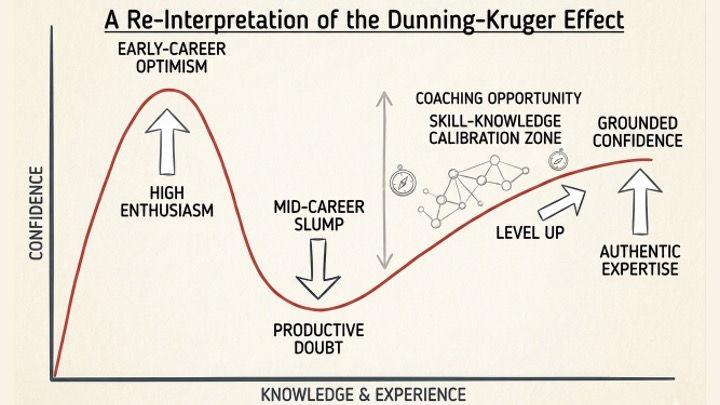
Awareness of the Drama Triangle is the vital first step toward effectively leading change. By recognising these roles, mid-career leaders can shift to healthier patterns where the Victim becomes a Creator, taking ownership of their learning and career direction.
The Persecutor transforms into a Challenger, offering constructive feedback and raising standards without blame.
The Rescuer evolves into a Coach, guiding others to develop autonomy and resilience. For example, instead of jumping into a conflict situation and seeking to pick up the fight on behalf of a more junior colleague the rescuer-as-a-coach might guide that colleague into a resolution of which they have and feel ownership.
If, as Davey contends, conflict is inherently necessary to get things done then Karpman’s Drama Triangle offers a compelling framework to understand and navigate the psychological traps that mid-career leaders may encounter. By recognising these dynamics and actively shifting toward healthier relational roles, leaders can reclaim agency and lead with clarity, courage and compassion.


Comments